T-REX Ledger, Explained for the Rest of Us
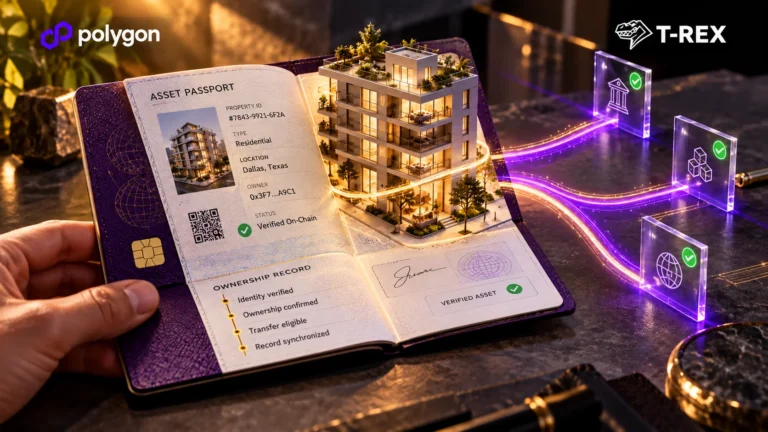
A blockchain is a highway, and it doesn’t care who’s driving. T-REX Ledger is the compliance chain that checks the license, built with Polygon CDK and backed by a $100 billion commitment from Apex Group.


A blockchain is a highway, and it doesn’t care who’s driving. T-REX Ledger is the compliance chain that checks the license, built with Polygon CDK and backed by a $100 billion commitment from Apex Group.

Your email reaches Australia in three seconds, but money takes three days. Polygon’s Open Money Stack and T-REX Ledger are rebuilding the rails so money and regulated assets can finally move like information.
Four articles of context, architecture, and use cases. This one is about what you actually do next.
Risk managers think differently than product managers. If you’ve ever sold anything for a living and had the compliance department tell you no, then you understand what I’m talking about.
The best test of any infrastructure layer is what gets built on top of it. Parts 1 and 2 covered the problem and the machinery.

Most oracle documentation starts with architecture diagrams and works backward to usefulness. We’re going the other direction.

The scenario is more common than it should be. Let’s say a protocol team wants to launch pre-IPO perpetuals. The demand is real. The mechanism is sound. The product is ready to build.
By this point, you know what Monad is, why it exists, and what you can actually do on it. This last piece is a bit more personal for us.
We’ve talked about what Monad is and why the tech matters. Let’s keep this article simple. If you’re a normal crypto user, what can you actually do on Monad right now?
You’ve probably heard blockchain teams flex about “parallel execution” and “sub‑second finality.” This article is about what that tech actually feels like when you’re just trying to swap a token, play a game, mint an NFT, whatever.