T-REX LEDGER, EXPLAINED FOR THE REST OF US
Last time I told you a blockchain is like a highway. It moves whatever you put on it, fast and cheap, and it doesn’t care who’s driving or if they have a license. For a text message, that’s the whole point. For your house deed, that’s a lawsuit.
T-REX Ledger is the fix. It’s a dedicated compliance blockchain for tokenized securities, and it keeps one master record of who’s allowed to own each regulated asset so that every other chain can check before a transfer settles. Here’s why it had to exist.
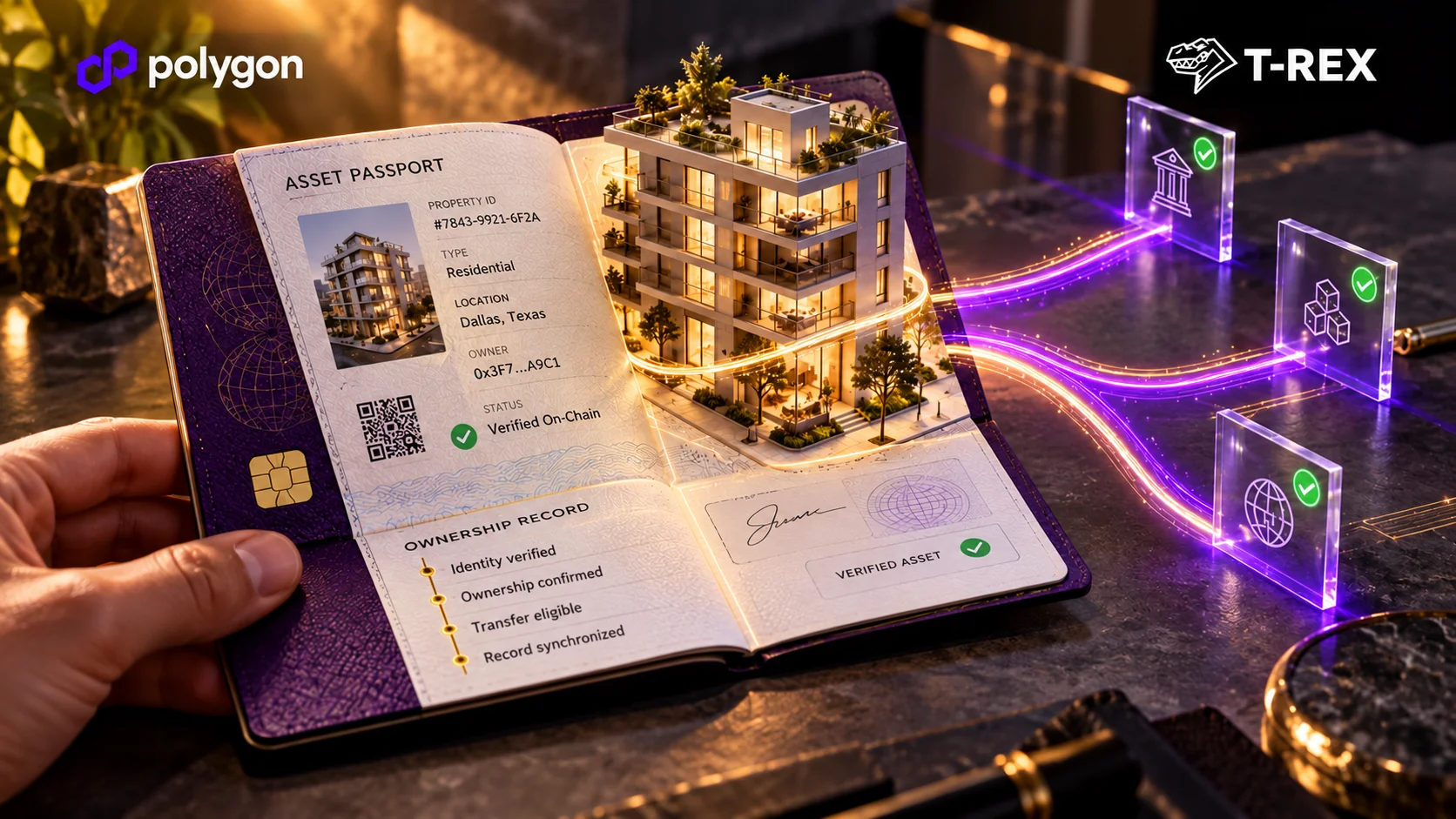
Imagine you own several units of an apartment building in Dallas. You hire someone to tokenize your units and before you know it, there’s a digital version that can move onchain. This is a tough concept for people without blockchain experience to understand, but it’s the beauty of Web3.
Quick aside… to borrow an idea from Michael Saylor, The first iteration of the web was dematerialization of mail (email). Web2 was the dematerialization of stores (online shopping). Web3 is the dematerialization of money. Money’s mostly digital anyway, but now it can live online instead of at the bank. You’re no longer limited by the bank’s rules and can move it 24/7 without a middleman by using a browser wallet, or wallet on your cell phone.
The industry calls your Web3 apartment deeds, a tokenized real world asset or RWA, and the standard that governs who’s allowed to own it is called ERC-3643. Now your deed can travel like an email. Amazing! But how do we verify its legitimacy?
The compliance problem with tokenized assets on multiple chains
For as long as there have been shares, a company called a transfer agent has kept that ownership list in an office. When I interned at a firm that no longer exists, called AG Edwards, I was in charge of updating the Standard & Poor’s 500 guide. Updated pages would arrive in the mail and I’d swap out the old pages. If one of the brokers in the office wanted info on GE to give to a client, they’d “Xerox” the page from the S&P book and give that to their client.
This was a long time ago, back when people sold encyclopedias door to door. Whenever I asked my mom a question she’d say, “Go look it up.” In protest I’d walk over to our Encyclopedia Britannica to find the answer.
I also spent time moving physical stock certificates from one place to another. To give you an idea how old I am (51), this was back when brokers faxed their client’s orders to the AG Edwards trade desk in St. Louis. The ability to open up an internal platform and enter a trade for your client didn’t exist yet.
I’ll share more on transfer agents later in this article series. They deserve their own article.
Regulated assets, like a bond, shares of stock, or a piece of that apartment building all come with rules. The transfer agent keeps track of who legally owns what, in which countries, in what amounts, and only after confirming the person claiming to be the owner is actually who they claim to be.

Why the rules don’t travel between blockchains
Then everyone started tokenizing assets and the rules didn’t travel. Ethereum had one list. Avalanche had another. Polygon had a third. Same fund, same investor, and every chain made you prove yourself again from scratch. Five chains, five sets of paperwork. The rulebook fell off the back of the truck at every border, and somebody had to rebuild it at the next one. Investment firms can live with a lot of things, but they can’t live with that. At Atlas Staking we run validators across a lot of different networks, and I can tell you none of those chains knows or cares what the chain next door decided.
What is T-REX Ledger?
T-REX Ledger is a dedicated compliance blockchain for tokenized securities. It keeps one master record of who owns each regulated asset, and other blockchains check that record before a transfer settles. It’s built with Polygon CDK, the same kit Polygon hands to any team that wants a chain of its own and it’s connected through Agglayer, the part of Polygon that lets different chains talk to each other. Both of those are pieces of what Polygon calls the Open Money Stack, the same payments plumbing we walked through last time.
T-REX Ledger is the reference copy that keeps track of who’s allowed to own this asset, in which country, and under what conditions. One list, kept in one place, that every connected chain checks before a transfer goes through.
Quick housekeeping. There’s an unrelated project on Arbitrum that also calls itself T-Rex. Different animal, different Jurassic Park. The one we’re talking about comes from Tokeny and Apex Group. I digress.
The T-REX Ledger doesn’t try to be the place where everything trades. Your fund share can live on Ethereum or Polygon or whichever chain the buyers happen to be on, and settle there. That chain just has to verify with T-REX Ledger first.

Think of it as the DMV for assets, except every highway in the country calls it before letting a car through, and it actually answers, LOL.
What ERC-3643 is, and how it blocks a transfer you’re not allowed to make
How does a rule follow a tokenized asset around? Well, the technical standard underneath all this is called ERC-3643, and you can let that go in one ear and out the other. What you need to know is that the compliance check lives inside the token. The token itself checks who’s receiving it before it moves. If that wallet isn’t cleared to hold it, the transfer fails. It doesn’t get flagged for review or kicked to somebody’s inbox for Monday. It just doesn’t happen.
You aren’t allowed, so it doesn’t move. Even this caveman can follow that.
Your credentials attach to you, through a system called OnchainID, and not to a wallet. Your passport and your KYC follow you to whatever wallet you use. Let your credentials expire and every transfer to you stops until you renew. Move to a country where that fund can’t be sold and the same thing happens.
On October 1, OpenZeppelin and T-REX Network pushed that further. The new OnchainID can require more than one signer, so a fund can set it up where the CFO and the compliance officer both have to approve before a transfer clears.
Why T-REX Ledger needs its own blockchain
Why not just run all of this on Polygon or Ethereum and skip the extra chain? Two reasons, and neither one is technical.
The first is neutrality. Apex Group services $3.5 trillion in client assets, and those clients are never going to agree on one blockchain. T-REX Ledger sits off to the side and answers the same question for every chain, which is exactly why the other chains are willing to ask it.
The second is that compliance checks shouldn’t have to fight memecoin traffic for space. A dedicated chain means the eligibility answer doesn’t wait behind somebody’s NFT mint. And because it’s built using Polygon CDK, which uses cryptographic proofs for finality, there’s no obnoxious waiting period while the network sees if anyone objects. The final answer is given quickly.

Where T-REX Ledger stands in October 2026
Apex Group owns Tokeny, the team that wrote the ERC-3643 standard, and it’s committed to putting $100 billion of tokenized assets onto T-REX Ledger by June 2027. Apex will also be the network’s first onchain transfer agent, which is the job we’ll dig into a few weeks from now. The standard already has over $32 billion tokenized under it and more than 140 institutions in its association, DTCC and Deloitte among them.
When does T-REX Ledger mainnet launch?
T-REX Ledger is live on testnet. Mainnet’s targeted for the fourth quarter of this year, which, if you check your calendar, is now. As a Polygon validator we’re excited.
T-REX Ledger questions, answered
Is T-REX Ledger live yet? The testnet is. Mainnet is targeted for the fourth quarter of 2026, and this line gets updated the day it launches.
Is T-REX Ledger the same thing as ERC-3643? No. ERC-3643 is the token standard, the rules that live inside each token. T-REX Ledger is the blockchain that keeps the master list those rules check against.
Do I need to do anything if I hold POL? No. T-REX Ledger runs on Polygon’s toolkit and connects through Agglayer, so the activity it brings lands on the ecosystem your stake already secures.
What this means if you stake POL
If you stake POL with Atlas, you’re on the road crew for this. Atlas has run Polygon validators since the network’s genesis, and T-REX Ledger is built with Polygon’s CDK toolkit and wired into Polygon’s ecosystem through Agglayer. Apex has committed to bringing $100 billion of tokenized assets onto these roads through T-REX Ledger by June 2027. Payments on the Open Money Stack, assets on T-REX Ledger, both landing on the same validator set.
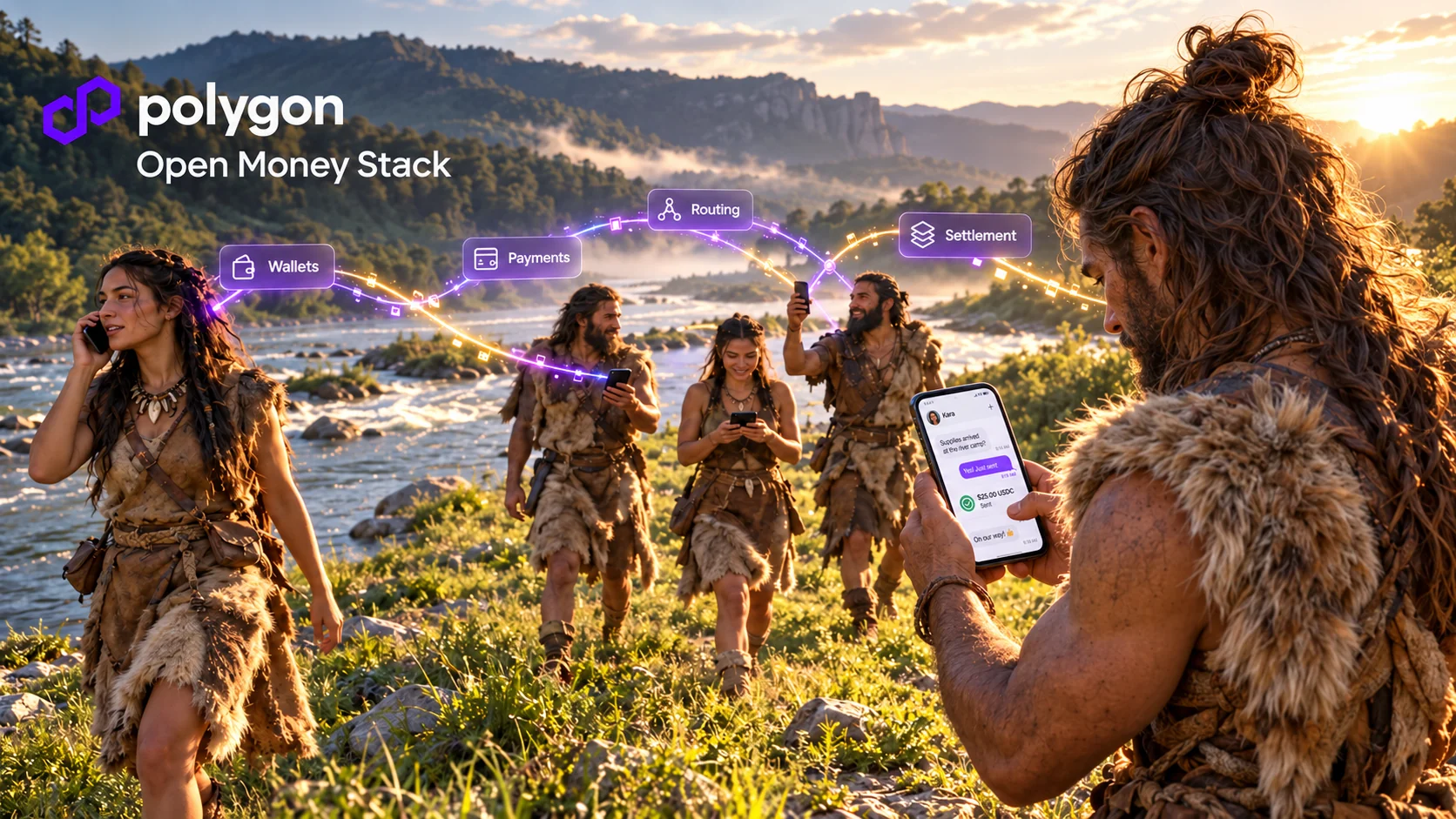
Next time we go back to the money half, Polygon’s Open Money Stack. You’ve got digital dollars sitting in a wallet. Can you buy a coffee with them yet? Can you get them into your actual bank account without handing them to a middleman first? The answer changed last month, and it’s a good one.
Bring your club. Next time we’re going to try buying coffee with it.



Nothing we say is financial advice or a recommendation to buy or sell anything. Cryptocurrency is a highly speculative asset class. Staking crypto tokens carries additional risks, including but not limited to smart-contract exploitation, poor validator performance or slashing, token price volatility, loss or theft, lockup periods, and illiquidity. Past performance is not indicative of future results. Never invest more than you can afford to lose. Additionally, the information contained in our articles, social media posts, emails, and on our website is not intended as, and shall not be understood or construed as financial advice. We are not attorneys, accountants, or financial advisors, nor are we holding ourselves out to be. The information contained in our articles, social media posts, emails, and on our website is not a substitute for financial advice from a professional who is aware of the facts and circumstances of your individual situation. We have done our best to ensure that the information provided in our articles, social media posts, emails, and the resources on our website are accurate and provide valuable information. Regardless of anything to the contrary, nothing available in our articles, social media posts, website, or emails should be understood as a recommendation to buy or sell anything and make any investment or financial decisions without consulting with a financial professional to address your particular situation. Atlas Staking expressly recommends that you seek advice from a professional. Neither Atlas Staking nor any of its employees or owners shall be held liable or responsible for any errors or omissions in our articles, in our social media posts, in our emails, or on our website, or for any damage or financial losses you may suffer. The decisions you make belong to you and you only, so always Do Your Own Research.